Your Followers Aren’t All Customers
By Jaci Russo | CEO & Co-Founder, brandRUSSO
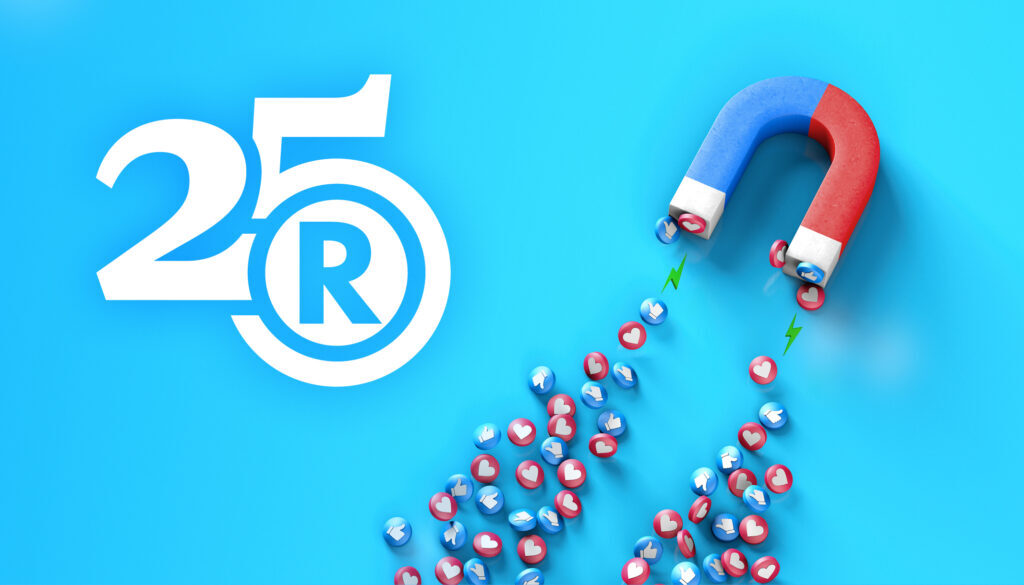
There’s something deeply satisfying about watching your follower count go up. Another 100 followers feels good. Another 1,000 feels even better. Put a little upward arrow next to the number in a marketing report and suddenly it looks like everyone involved deserves a promotion.
But there’s an inconvenient detail we sometimes forget while admiring the growth chart: most of those people probably aren’t going to buy anything from you.
That doesn’t make them useless, and it certainly doesn’t mean growing an audience is a waste of time. It simply means a follower and a potential customer are not automatically the same person.
For B2B companies especially, that distinction matters. You may have employees, competitors, vendors, job seekers, former customers, industry peers, students, friends of employees, and one person who followed you in 2019 because you posted a picture of a dog at the office. They all count toward the same number, but they don’t all have the same value to your business.
A Bigger Audience Isn’t Automatically a Better Audience
Imagine two companies. One has 50,000 followers and the other has 5,000. Which one has the stronger social media presence? The answer is the deeply unsatisfying marketing response of “it depends.”
If the company with 50,000 followers mostly reaches people who will never need its services, while the company with 5,000 has built an audience full of decision-makers, customers, prospects, and industry influencers, the smaller account may be doing considerably more for the business.
That’s because reach only becomes useful when you’re reaching someone who matters.
This can be difficult to remember because social platforms are very good at making numbers feel important. Follower counts are public. Likes are visible. Views climb right there on the screen. Meanwhile, “three operations executives from companies we’ve been trying to reach spent time reading our case study” doesn’t come with nearly as satisfying an animation.
But I know which one I’d rather have.
Not Every Follower Needs to Become a Customer
Before we swing too far in the other direction, your social audience should not consist exclusively of people currently holding a purchase order.
Brands exist within communities, and those communities include plenty of people who may never directly buy from you.
An employee who shares your content can extend your reach. An industry peer may recommend you later. A former customer can advocate for your company. A prospective employee may eventually join your team. Someone who isn’t the decision-maker today may become one three years from now.
Those relationships have value.
The mistake is assuming they all have the same value or should all be measured the same way.
Social media works better when you understand who is paying attention and what role those people might play in your brand. Otherwise, you end up treating a follower count as one giant group of potential customers and wondering why your 12,000 followers haven’t resulted in 12,000 sales calls.
Your sales team is probably grateful they haven’t.
Engagement Can Fool You Too
Follower count isn’t the only number capable of distracting us. Engagement can do a pretty good job of it as well.
Let’s say one post gets 200 likes and another gets 25. The obvious conclusion is that the first post performed better.
Maybe it did.
But what if the first post was a picture from the company crawfish boil and most of the engagement came from employees, friends, and people debating whether the potatoes looked properly seasoned? Meanwhile, the second post explained a problem your company solves and was seen by several prospective customers.
The crawfish post may still have value. Culture matters, personality matters, and nobody is suggesting that every social post needs to read like a sales brochure. Please don’t do that.
The point is that engagement needs context.
A smaller response from the right audience can sometimes be more valuable than a huge response from people who have no connection to your business goals.
Who Are You Actually Trying to Reach?
This is the question that should come before the content calendar, posting schedule, platform debate, or discussion about whether your CEO needs to start making videos.
Who actually matters?
For a mid-size B2B company, that audience might include a fairly specific group of decision-makers within particular industries, company sizes, or geographic markets. If those are the people you’re trying to influence, your social strategy should be built around what they care about.
What problems are they dealing with? What questions are they asking? What would make them reconsider the way they’re currently doing something? What expertise does your company have that would genuinely be useful to them?
Those questions tend to produce much better content than “What can we post on Tuesday?”
They also change how you evaluate success.
Instead of simply asking whether the audience grew, you can ask whether you’re becoming more visible and relevant to the people you actually want to reach.
The Algorithm Doesn’t Know Your Business Strategy
Social platforms have their own goals, and surprisingly, helping your company hit its annual revenue target isn’t necessarily at the top of the list.
Platforms want engagement. They want people watching, clicking, commenting, sharing, and staying on the platform. That means the content rewarded with the most reach isn’t automatically the content most valuable to your business.
A funny office video might travel farther than a thoughtful post about an industry challenge. A broad motivational quote may collect more likes than a detailed case study. A trending topic can generate attention from thousands of people who couldn’t pick your ideal customer out of a lineup.
That doesn’t make the algorithm bad. It simply means the algorithm and your business have different definitions of success.
Your social strategy has to know the difference.
Focus Makes the Numbers Mean Something
Focus is the first pillar of our Razor Branding™ process because knowing exactly who you’re trying to reach changes almost every marketing decision that follows.
When your audience is clear, you don’t have to chase every person willing to click Follow. You can create content around the issues your customers actually care about, choose platforms based on where those people spend their time, and evaluate performance based on whether you’re building meaningful attention with the right audience.
You may still want follower growth. You may still celebrate a post that performs well. You may still be delighted when something takes off and introduces your brand to thousands of new people.
The difference is that you know what those numbers are supposed to support.
Follower growth becomes a signal instead of the strategy itself.
The Takeaway
Having a large social media audience can absolutely benefit your brand, but the size of that audience tells you surprisingly little on its own.
The better questions are who those followers are, why they’re paying attention, and whether your content is helping the people who matter understand something meaningful about your company.
Some followers will become customers. Some will recommend you. Some will work for you. Some will help your content travel farther. And yes, some probably followed you for that office dog and haven’t thought about your company since.
That’s okay.
Your goal isn’t to turn every follower into a customer. It’s to make sure your marketing isn’t so busy collecting an audience that it forgets which audience the business actually needs.
Because 10,000 followers looks great on a report, but the right 100 people can be worth a whole lot more.
Let’s change the conversation.
Learn more about our Razor Branding™ process
https://brandrusso.com/razor-branding/
Or complete the market perception scorecard to get a clear read on how your market views you
https://brandrusso.com/mp-scorecard/

Jaci Russo, P.C.M., is the CEO and co-founder of brandRUSSO, a published author, entrepreneur, and sought-after speaker. She is the architect behind Brand State U, TrainYard Advisors, and co-host of the He Said, She Said, Razor Branding Podcast. Jaci is a civic leader, mentor, and mother of 4 and is part of the less than 1% of women-founded and led agencies in the U.S.

To learn more about brandRUSSO, subscribe to our blog , or add the He Said, She Said Branding Podcast to your playlist.
brandRUSSO was established in 2001 by Jaci and Michael Russo, representing a global portfolio of B2B clients in the professional services and manufacturing industries. As a strategic branding agency, we believe in the promise behind the brand, and that by changing the conversation we can inspire and motivate consumer behavior.