Stop, Go, and Change the World: How Black Inventions Continue to Shape Design, Branding, and Culture
By Ayree Johnson, Art Director, brandRUSSO
Every day, we follow signals without a second thought—red means stop, green means go, and yellow means…well, speed up or slow down, depending on the day you’re having.
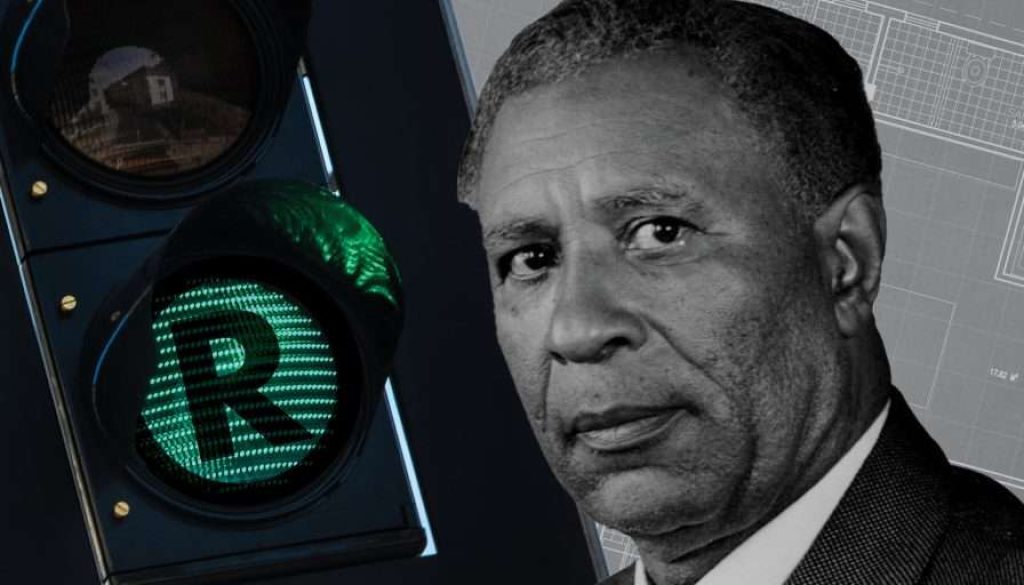
But have you ever wondered who came up with this system? Enter Garrett Morgan, the Black inventor behind the three-position traffic light—a simple yet brilliant idea that made streets safer and changed the world. Morgan’s traffic light helped solidify how we use color to communicate and is still used everywhere today
So, who was Garrett Morgan?
Garrett Augustus Morgan was born in Claysville, Kentucky on March 4, 1877, as the seventh of eleven children to a formerly enslaved family. Despite having only an elementary school education, Morgan was naturally curious and mechanically inclined. At 14, he moved to Cincinnati, Ohio, for better opportunities. Eventually, he settled in Cleveland, where he built a successful career as an entrepreneur and problem-solver.
Before his invention in 1923, traffic signals were a free-for-all—just a stop-and-go system with no in-between. Accidents were common, and streets were chaotic. Morgan’s solution? A three-position traffic light with a caution phase (yellow) gives drivers time to slow down before stopping. It was so effective that his design was eventually adopted worldwide.
While these colors had symbolic meanings in maritime and railroad transportation before, Morgan’s system standardized their use to influence design, branding, and communication worldwide.
What does this have to do with branding?
I’m so glad you asked!
Morgan’s traffic light didn’t just make roads safer—it helped cement red, yellow, and green as universal signals for action. And today, those same colors are a huge part of branding, marketing, and User Experience (UX) design:
🔴 Red: used to grab attention, create urgency, and encourage immediate action.
Brands like Coca-Cola, YouTube, and Target use red in their logos and marketing to evoke excitement, boldness, and energy. It’s no coincidence that sales and “buy now” buttons are often red—it’s a color that naturally pushes people to take action fast.
🟡 Yellow: associated with warmth, energy, and friendliness.
Companies like McDonald’s, DHL, and Snapchat use yellow to evoke positivity and excitement. Because yellow is bright and highly visible, it’s also often used for cautionary elements in branding and interface design.
🟢 Green: represents growth, trust, and sustainability.
Brands like Starbucks, Whole Foods, and Spotify use green to communicate freshness, reliability, and an eco-friendly mindset. Whether it’s a company selling organic products or a finance app signaling success, green is often the go-to color for brands that want to convey progress and security.
Beyond branding, the traffic light color system has also influenced digital interfaces and UX design. Many modern communication elements take inspiration from this system, using red for error messages and warnings, yellow for pending actions or caution, and green for confirmations and success notifications. Even something as simple as an “add to cart” button turning green is a direct nod to the intuitive meaning behind these colors. The same logic applies to store layouts, app designs, and even advertisement placements—just like a traffic light, brands subtly use color hierarchies to guide customers’ decisions and actions.
Why all of this matters
Without Morgan’s traffic light standardizing these meanings, would we still associate red with stopping and green with moving forward? Maybe. But his invention helped make it second nature by shaping how we drive and influencing how we navigate the world around us.
So next time you stop at a traffic light, think about the guy who helped organize the chaos. And if you’re working on a brand, a website, or even picking a color for your next project, remember—those signals we follow so naturally? They were once just an idea.
To learn more about brandRUSSO, subscribe to our blog or add the He Said, She Said Branding Podcast to your playlist.

Originally from New Orleans, Louisiana, Ayree relocated to Lafayette to pursue her passion for design at the University of Louisiana at Lafayette, where she earned a BFA in Graphic Design. Currently, she serves as one of brandRUSSO’s Art Directors, working with a wide variety of clients to help shape their visual identities and build stronger, more effective brands.

brandRUSSO was established in 2001 by Jaci and Michael Russo, representing a global portfolio of B2B clients in the professional services and manufacturing industries. As a strategic branding agency, we believe in the promise behind the brand, and that by changing the conversation we can inspire and motivate consumer behavior.